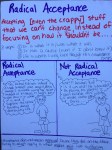
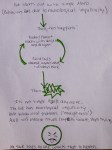
By Angelica Shiels Psy.D. Oh, what’s that? You’ve always wondered, “What exactly is radical acceptance, and does anyone have any amateur drawings depicting its every-day application?” ?? Today is your lucky day: And, incidentally, I just also had to radically accept that … Continue reading →
By Angelica Shiels Psy.D. Question: My son has ADHD, and keeps touching other kids (not aggressively; Just little stuff that he can’t help.) He has an IEP. The teacher puts him way in the back of the room to be away … Continue reading →
By Angelica Shiels Psy.D. So I had a fan, who I completely “don’t know” (wink, wink) write me: My 3.5 year old keeps running away when I take her out – she’s not being defiant but does not understand that … Continue reading →
By Angelica Shiels Psy.D I’m going to make this quick and dirty, since you parents with ADHD kids don’t exactly have the time or luxury of sitting around with your feet up, enjoying quiet and leisurely reading. But the school … Continue reading →
By Angelica Shiels Psy.D. I was recently reading a great article about ADHD and marriage. Basically, the article described a type of “irritable, selfish, unhelpful, sometimes useless” partner, a partner often described to me in therapy by a frustrated wife, describing her schlub … Continue reading →
Bipolar disorder is often undiagnosed or misdiagnosed in pediatric populations. Bipolar disorder in kids often includes rapid “mood cycling” (changes in mood) and irritability (I remember learning to be on the “lookout,” but don’t automatically diagnose bipolar disorder if I … Continue reading →
Here is a great resource for parents of kids/teens with depression, anxiety, low self-esteem, etc. Basically a bunch of therapists got together and made a booklet with all of their favorite therapeutic activities, and put it on the internet as … Continue reading →
Bipolar disorder is often undiagnosed or misdiagnosed in pediatric populations.
Bipolar disorder in kids often includes rapid “mood cycling” (changes in mood) and irritability (I remember learning to be on the “lookout,” but don’t automatically diagnose bipolar disorder if I came across a child with frequent explosive anger.). Also of note, one study found that more that 80% of children with bipolar disorder also met criteria for ADHD (hyperactive, inattentive, impulsive.)
Please check out these articles for more information about the causes, presentation, and treatment for bipolar disorder in children.


 ON THE YELLOW COUCH